
CHINA ADVENTURE CLUB JOURNEYS
Old Country Living: Guizhou and Guangxi
Explore China Adventure Club journeysJourney at a glance
- Day 1 Guiyang
- Day 2 Kaili
- Day 3 Kaili
- Day 4 Wudong
- Day 5 Congjiang
- Day 6 Congjiang & Around
- Day 7 Zhaoxing
- Day 8 Depart from Guilin
A National Geographic “Tour of a Lifetime”, this backcountry adventure through Guizhou and Guangxi takes in bamboo forests, classical karst peaks and undulating rice terraces. Trekking between villages, you’ll share the hospitality of vividly distinct ethnic groups that still practice a traditional way of life.
About this Journey
With fairytale images of rustic lakeside farms, terraced rice fields, jagged karst peaks and colorful ethnic minorities, the southwest provinces of Guizhou and Guangxi have been a favorite refuge for travelers for decades. Selected as one of National Geographic Traveler‘s “Tours of a Lifetime,” this journey takes you on an exploration of the breathtaking backcountry and vibrant ethnic minority culture of these historically secluded areas. Starting in Guizhou, hike through remote pastures and rice paddies as you trace local footpaths from village to village, stopping to share meals and spend nights with local ethnic minority families, each with their own customs and traditions.
Tour Highlights
- Experiencing the real, hidden China by interacting with various ethnic minority communities
- Soaking in the astounding surroundings of oblong mountains jutting out amidst terraced rice fields and picturesque villages on a cruise along the Li River
- Hiking through the Dragon's Backbone Rice Terraces, which display a different concoction of vibrant colors with every passing season
YOUR JOURNEY
Route Map
Select a route section to explore the map. Tap a stop for its location or use the directions link for the next leg. Flights, trains, cruises and hiking arrangements follow your itinerary.
Itinerary
Day 1 Guiyang
First Stop: Guiyang
Extraordinary mountain scenery, limitless hiking opportunities, and fascinating minority cultures who have maintained a traditional way of life for centuries define the tiny province of Guizhou. Built during the Ming Dynasty, its capital Guiyang, or ‘precious sunshine’ in Chinese, is a walled city with a rich political history. Previously, Guiyang and the rest of the province has been relatively isolated from the rest of the country’s modernization and left largely untouched by tourism. However, with global corporations setting down roots in the provincial capital, that’s like to change. One thing is certain: its enduring legacy will continue to be the colorful ethnic groups that call the city and its surrounding areas home – and that make the region such a wonderful place to explore.
Your Journey Begins
Today is the day, the start of your China Adventure Club adventure. Step off the plane in Guiyang and meet your local guide in the airport arrivals hall. They’ll be waiting to welcome you and will have your private vehicle on standby, ready to take you to Kaili.
Drive to Kaili
The ride from Guiyang to Kaili will take around 1.5 hours.
Next Stop: Kaili
Tucked away in the southeast corner of Guizhou Province sits Qiandongnan Miao and Dong Autonomous Prefecture. The seat of the prefecture, Kaili, isn’t just the region’s industrial center – it’s the heart of China’s Miao culture. Although its name means ‘newly cultivated land’, Kaili has served as a melting pot for local minorities for centuries. Surrounded by idyllic countryside, terraced hillsides, and quaint towns that appear as if they’ve been frozen in time, the city is a convenient base for exploring the innumerable ethnic minority communities that call the region home, along with their fascinating, rich cultural traditions.
Meals included: dinner
Day 2 Kaili
Wangba Village
Set out for Wangba, a sleepy village inhabited by the Gejia people. In fact, very little of the Gejia culture is known to the outside world. Although classified as Miao, they are really a separate group entirely. Wander around the village for a leisurely hour and a half, taking in the collage of rustic homes and women handily crafting embroidered and batik masterpieces out of thread, beeswax, and indigo. Before moving on to your next adventure, step through the doorway into a local home for a taste of daily life in Wangba.
Black Miao Village of Fan Pai
After driving to this more remote area of Guizhou, enjoy a brief hike to the village of Fan Pai. The minority group that calls this village home, the Black Miao (or Hmu), were named so because of the distinct dark color of their traditional clothing. As you wander around the village, take a closer look at the clothing of Fan Pai’s women and see if you can see the differences from other Miao styles. Here in Fan Pai, notice the more concise and introverted style of dress, with darker colors, less embroidery, and less silver. While in Fan Pai, enjoy the hospitality of a local family as you enter their home to observe how textiles are dyed with indigo, before strolling through the village and admiring the stilted architecture and intricate wood buildings perched on the hillsides.
Chonganjiang Village
Overlooking the lazy Chong’an River, the Miao village of Chonganjiang is a charmingly scruffy waterfront town. Once a bustling river port, the village’s merchant past lives on in its colorful Fifth-Day Market, where ethnic minority villagers from the surrounding mountains sporting their traditional costumes converge to shop for food and other goods. Stroll along the river, marveling at the ancient bridges that span its banks and admiring the mountains that tower in the distance. And if the timing is right, get in some prime people-watching and rousing bargaining on market day.
Meals included: breakfast, lunch, and dinner
Day 3 Kaili
Drive to Leishan County
Moving deeper into unpaved territory, set out on a ~1-hour drive bound for Leishan County, the heartland of the Long-Skirt Miao people.
Hike Through Leishan County
Embark on a breathtaking ~1.5-hour hike through picturesque countryside and captivating ethnic minority villages. This hike will take you downhill from the village of Baiyan, past verdant terraces and rushing waterfalls, before ending in Taoyao, a village renowned for its pottery artisans. Through each stop, enjoy a chat with locals and acquaint yourself with a part of China that outsiders are seldom exposed to.
Datang Village Short-Skirt Miao
Drive ~20-minutes to Datang, home of the distinct Short-Skirt Miao people. Datang village best recognized by the women’s unique style of dress. Here, for reasons that remain untraceable, female villagers wear skirts that are only 10 centimeters in length – even in extremely cold conditions. These ‘miniskirts’ most likely originated from the Ming Dynasty some 600 years ago, although the exact period is unknown. Discover the other distinctive feature of Datang – the granary barns built on stilts above the water – as you come to better understand local ingenuity.
Make Music in Paika Village
The near-by Paika Village, home to a Long-Skirt Miao community, is best known for its ancient musical traditions and warm hospitality. In this well-preserved Miao hamlet, locals still make handmade lusheng pipes (used to celebrate fruitful harvests and honor ancestors) out of bamboo, regularly putting on performances with their creations. Marvel at their craftsmanship as you watch village artisans at work – you might even be lucky enough to catch a spontaneous concert.
Langde Village
En-route to Rongjiang County, we will stop at Langde, a Long-Skirted Miao village known for its stilted wooden houses and festive ceremonies. The village women are oftentimes adorned in intricate silver jewelry and the men are robed in swathes of stormy cerulean. Walk down the stone-hewn paths branching out across the village, taking a side route now and then to admire the various stone mills and water wheels up close.
Return to Kaili
As the sun sets on your day in Leishan County, hop in the car for the ~1.5-hour drive back to Kaili to rest for the remainder of the evening.
Meals included: breakfast, lunch, and dinner
Day 4 Wudong
Tang’an Village and Dong Ethnic Eco-Museum
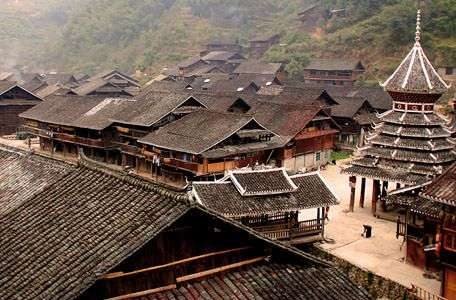
Nestled among the terraced rice paddies and surrounded by lush green mountains on three sides, Tang’an Village is one of the true hidden gems of Guizhou. Said to be one of the more traditional Dong villages, the centerpiece of Tang’an is the Dong Ethnic Eco-Museum – a living museum celebrating traditional Dong culture and China’s first ecological museum. While there is a permanent display and information center in the village itself, the communities living in Tang’an and the surrounding countryside are the true heart of the Eco-Museum. Learn how traditional cloth-making involves using egg whites, pig’s blood, and wooden mallets to create their distinctive metallic sheen, before discovering how the fields have been plowed by the farmworkers now gathering for a game of Chinese poker. After exploring Tang’an, hike back to Zhaoxing (about 2 hours) through the rice fields and along country lanes.
Relax for the afternoon
Enjoy some time to relax or explore on your own. If interested, witness Shinning Cloth of Dong, In the village like Zhaoxing, in Fall Season, everyone is busy pounding the cloth,the main reason for this is Aug and Sep and Oct, many villagers dye cloth for their use, the cloth is dipped in the indigo, dried and dipped again to achieve the desired color, and then boil the dyed cloth with oxhide, the purpose of this is to be glued on the fabric, dry again, and pound it thousand of time on the flat stone, with polish eggwhite and pig blood, a few hours later, cloth is very shinny.
Meals included: breakfast, lunch, and dinner
Day 5 Congjiang
Papermaking in Shiqiao Village
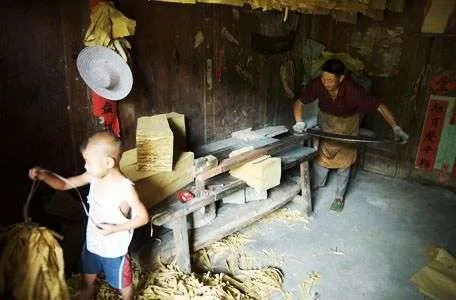
Visit Shiqiao Village near Kaili to learn about traditional papermaking. Local artisans demonstrate how bark is prepared, soaked, processed into pulp, and formed into sheets. Try parts of the process yourself under their guidance.
Dali Dong Village
Head over to Dali village, a quaint village home to the Dong minority, the second largest ethnic minority in Guizhou. Though it has been recognized for its uniqueness and is listed as a UNESCO world heritage site, Dali has not lost its charm and our time in the village will give us the chance to immerse ourselves in the unique culture of its local people. Wandering around the village, we will witness the everyday lives of the Dong, which remain largely unchanged despite the passing of time.
Dong A Capella Choir
Enjoy a private performance by the Dong choir. A musical medley performed without instruments, completely a cappella. Boys and girls join together in such harmony that it is said one can attain inner peace simply by listening. The songs are mainly about harvest, courting, farming, fertility, and family.
Drive to Congjiang
Head to your final destination for the evening, Rongjiang (approx. 2-hour drive).
Meals included: breakfast, lunch, and dinner
Day 6 Congjiang & Around
Xiangshuiyan Waterfalls
Situated in the core place of National Park of Mt.Leigong, these beautiful waterfalls are fed by mountain water. We will take a leisurely hike for about 1.5 hours to fully enjoy the scenery.
Biasha Village
The musketeer village of Biasha is home to the well-known Biasha Miao people. Here, gun-ownership is an integral part of men’s lives, unusual in a country where gun ownership is otherwise prohibited. But for the Biasha Miao, making guns and using guns has been part of their tradition and heritage for generations. Discover the history of this gunslinging minority as you explore the village, admiring another remarkable tradition: the original topknot. Tradition has is that Biasha males do not cut their hair until they are 15 or 16, at which point, a ceremony takes place and everything but the long ponytail in the middle of their head will be shaved off with a sickle.
Zhanli Village
While Zhanli village offers amazing examples of the typical Dong architecture style, what makes this small village truly stand out from the rest is its customs. With the help of our guide and through conversations with the locals, learn more about their unique agricultural traditions and listen to the townspeople’s tale of their ‘magic wells’ with water that is said to create a special family-planning potion that can decide a baby’s sex.
Meals included: breakfast, lunch, and dinner
Day 7 Zhaoxing
Diping Covered Bridge
En route to Zhaoxing, we’ll make a stop at Diping Covered Bridge, which is a typical Dong architectural feature, these are known as ” Wind and Rain” bridges where villagers can shelter from the elemets. The Bridge we are visiting is the 2nd largest covered bridge in China over Duliu river.
Explore Zhaoxing Village
Take to the meandering streets of Zhaoxing and get to know the village by taking in the details. Stroll across the covered bridges and wander through the wooden-stilt houses. Find the five drum towers that represent five different virtues, and see if you can tell which one is which, noting the difference in size, construction, and design (as well as the complete lack of nails holding them together).
Meals included: breakfast, lunch, and dinner
Day 8 Depart from Guilin
Transfer to Guilin Airport
Your local guide and private chauffeur will escort you to Guilin airport on a ~2.5-hour drive and help you check in for your departure flight back to Beijing.
Meals included: breakfast
Hotels
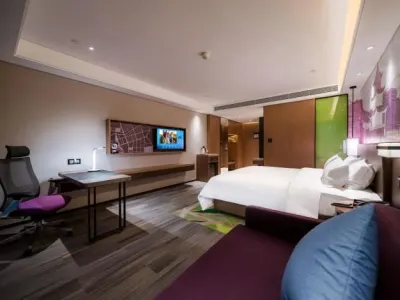
Hampton by Hilton, Kaili
5 starWith a friendly staff and firm, comfortable beds, Hampton by Hilton in Kaili was opened in 2019 and offers a slice of home in Guizhou. The hotel is hard to miss, the lone modern building in the area. Inside, the rooms are cozy, clean, and come with modern amenities. The hotel’s particularly colorful rooms and delicious breakfast serve to keep you energized for your day’s adventures.
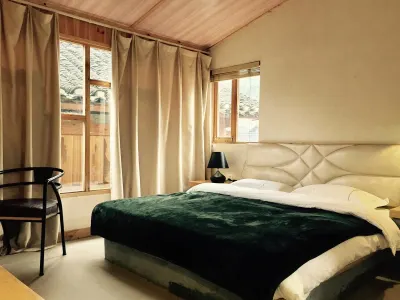
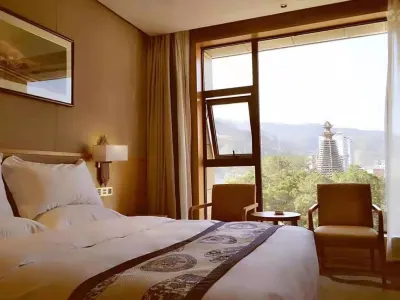
Indigo Lodge Zhaoxing
Local BoutiqueLocated in the heart of the town, the Indigo Lodge Zhaoxing makes for the perfect base from which to explore the area and jump into the center of the action. Designed in typical Dong style, this hotel is made completely of fir wood and offers lovely views of the surrounding landscapes. A contemporary interplay of light woods and concrete inside, rooms are airy, inviting, and simply but comfortably appointed. It’s the ideal home away from home for weary travelers.
Xinxiang Songlai Grand Hotel, Congjiang
4 starThe Congjiang Xinxiang Songlai Grand Hotel is a newly-opened 4-star hotel in Congjiang. The rooms and amenities are basic, but we deem it the best option available in this area.
Photos
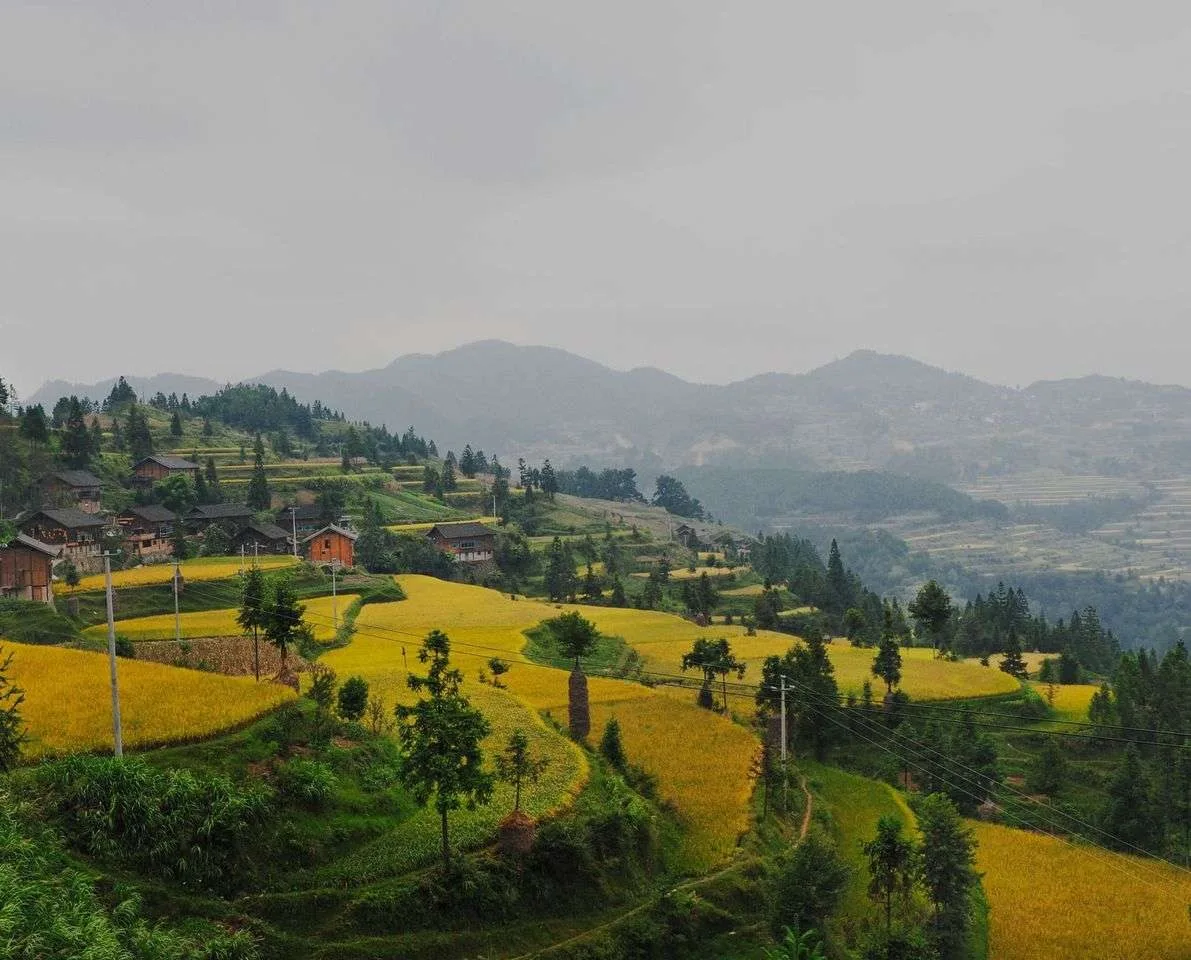
Photos china-private-tours-South china tour guillin travel tours guizhou-landscape EducationToursStudentTravelsSchoolTrips-zhaoxing-village-homestay papermaking Ground-Opera-2
Details
Recommended seasons
春
Spring
秋
Fall
冬
Winter
What’s Included
- Services of an English-speaking local English-speaking guide
- Accommodation based on double occupancy with breakfasts included
- All overland transfers with private chauffeur and in-transport refreshments
- Private chauffeur service to and from airport at start and end of your trip
- All admission fees and activity expenses, as noted in the itinerary
- Meals as noted in the itinerary with complimentary drinking water
What’s Excluded
- International & domestic flights, domestic trains, plus relevant taxes
- Chinese tourist visa, which is required for most foreign passport holders
- Travel and medical insurance
- Meals, apart from those included in the itinerary, and alcohol
- Expenses of a personal nature
- Excursions and activities not included in the itinerary
- Discretionary gratuities for guides and chauffeurs
TAILOR-MADE TRAVEL
Request This Tour
Tell us your preferred dates, group size, and interests. We will prepare a personal proposal for your China journey.
Request the Tour